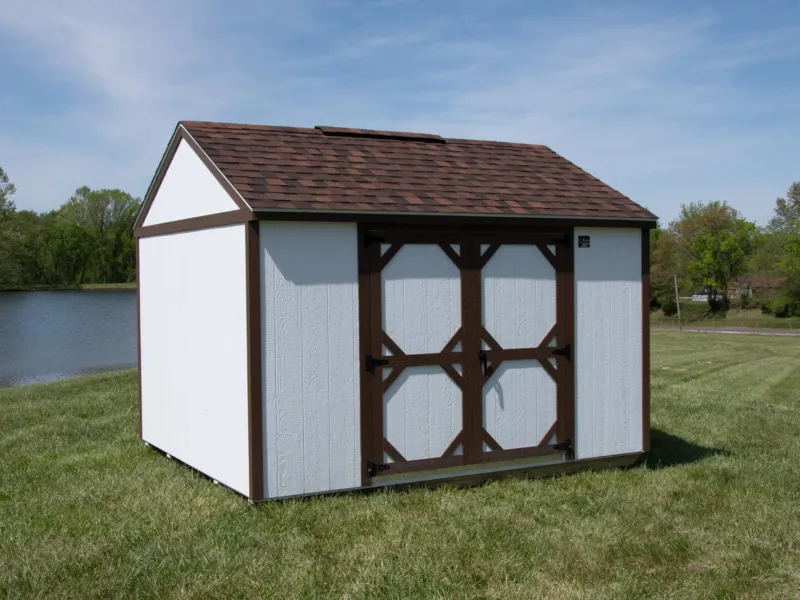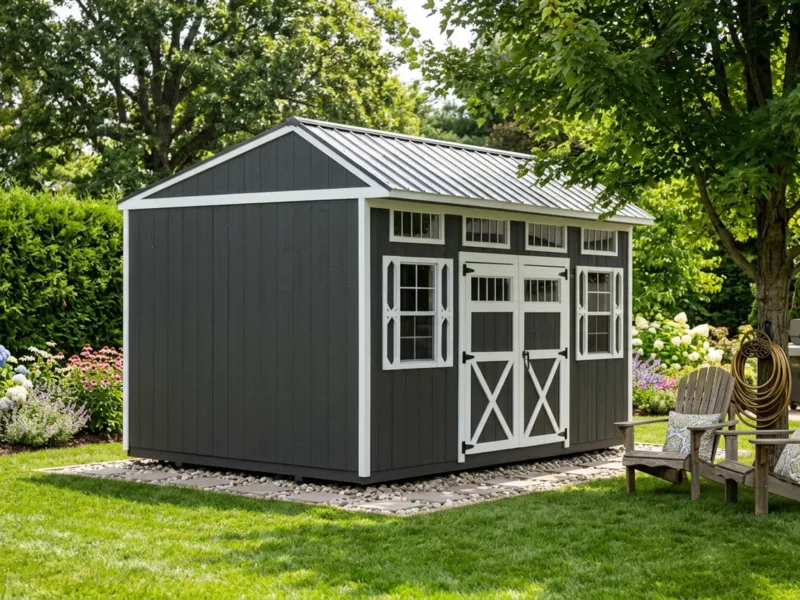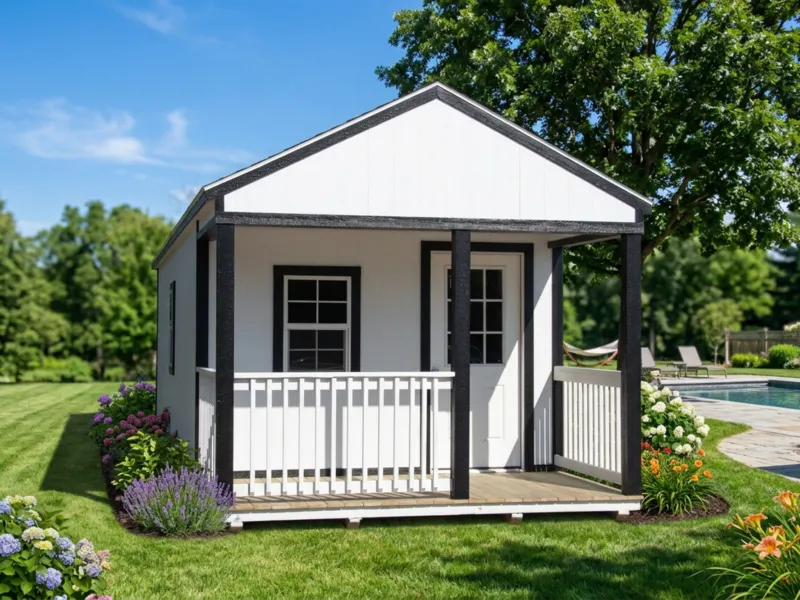
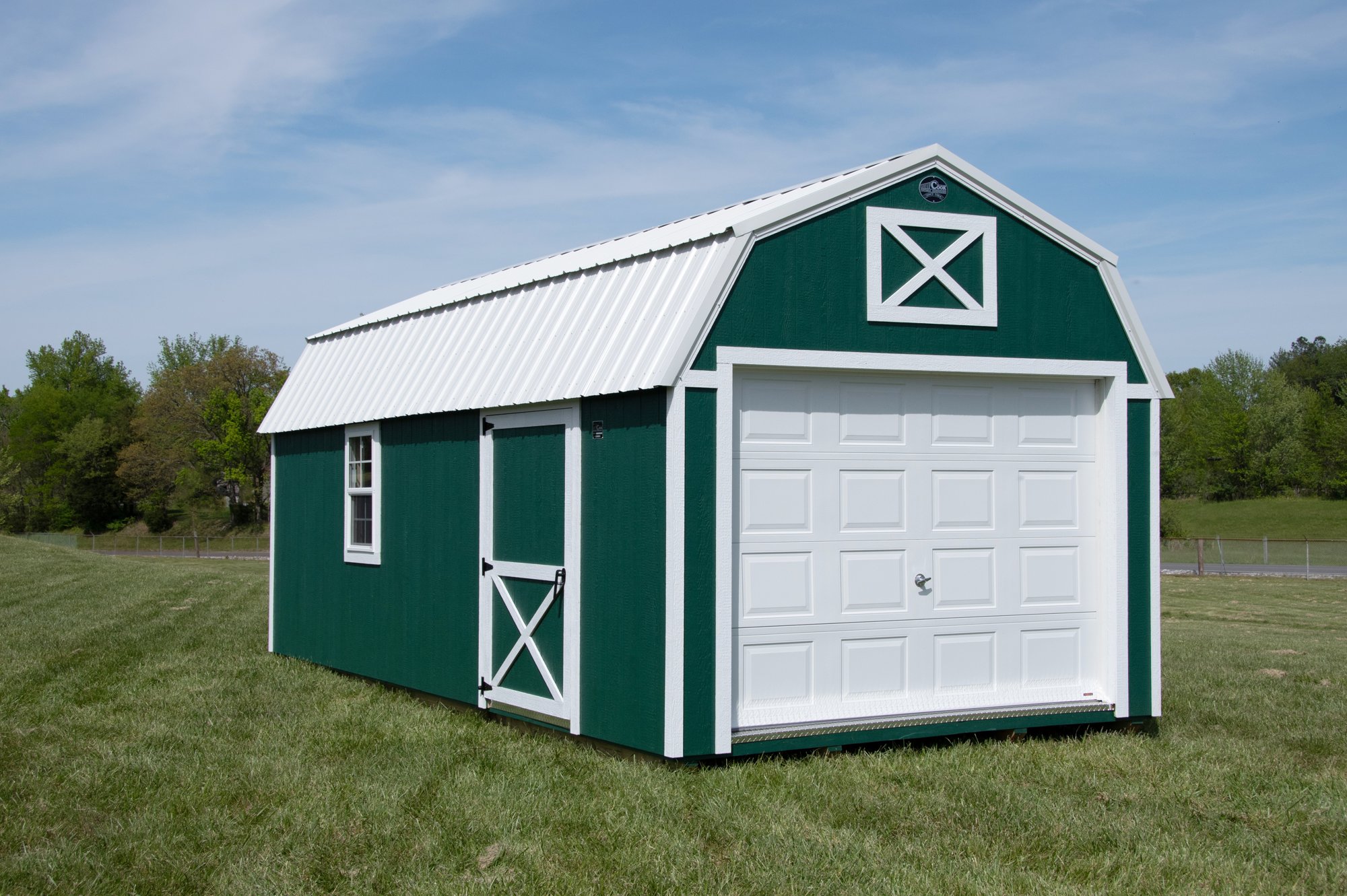
For most Cook Portable Warehouses buildings, a gravel pad is the right foundation: it drains water away from the wood floor, stays non-permanent, costs less than concrete, and rarely triggers a permit. Choose a concrete slab only when you need a permanent structure or your local code specifically requires one.
Cook builds wood portable buildings and delivers them fully assembled, then sets them on a level base at your site. That one fact drives the whole decision: you are choosing what your building rests on, not pouring something it gets bolted into. Here is how the two options compare.
Why a gravel pad is the Cook default
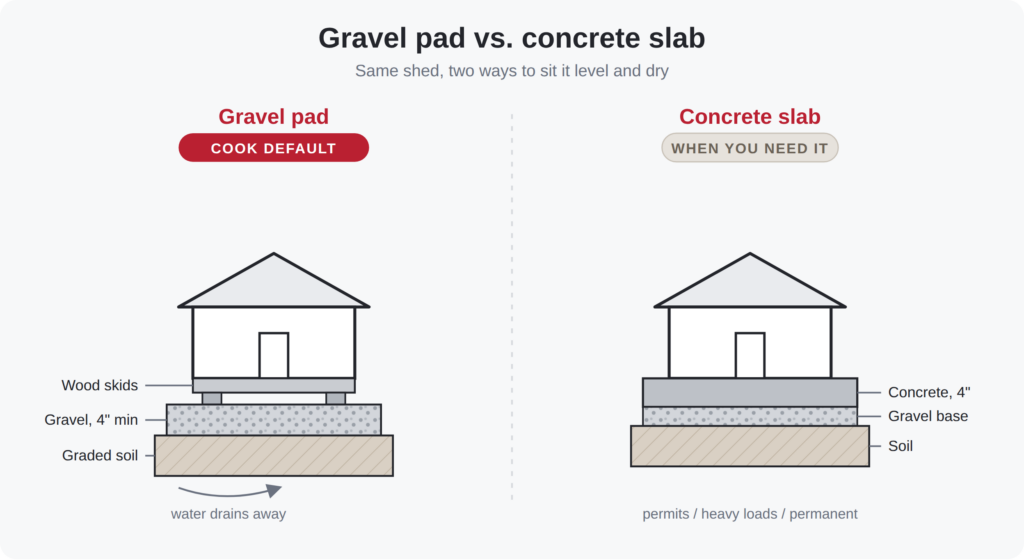
A compacted gravel pad does four jobs a wood building needs from the ground up:
- It drains. Water moves down through the gravel instead of pooling against the treated floor system, which is the single biggest factor in how long a wood floor lasts.
- It stays non-permanent. Your building sits on the pad rather than anchored into a slab, so it can be releveled, reblocked, or relocated later without demolition.
- It costs less. Gravel and grading run a fraction of the price of forming and pouring concrete, and there is no cure time to wait on before delivery.
- It usually avoids a permit trigger. Because the building is portable and the base is non-permanent, many jurisdictions treat it differently than a permanent structure.
Size the pad a little larger than the building so the base fully supports the floor and sheds runoff past the walls. A common target is a gravel pad about 12″ larger than the building footprint on each side — approximate; your dealer confirms exact sizing and grade for your lot during a free on-site check.
When concrete makes sense
A poured slab is the right call in specific situations, not as a default:
- Your local code requires a permanent foundation for a structure of that size or use.
- You want a hard, dust-free floor for a workshop or studio and plan to keep the building in one place indefinitely.
- Your site slopes enough that a formed, level slab is easier to achieve than grading a gravel pad.
The trade-offs are real: concrete is permanent, costs more, takes days to form and cure before anything can sit on it, and locks your building to one spot. If you ever want to move a Utility or Garden Shed to a new corner of the property, a gravel pad makes that a delivery job, not a jackhammer job.
How your foundation choice affects permits
Foundation and permits are linked. A gravel pad keeps the building non-permanent, which in many areas is what keeps a small building out of permit territory. Pouring concrete can do the opposite: a permanent foundation often triggers a permit regardless of the building’s size, because code frequently defines a “permanent structure” by how it attaches to the ground, not by square footage.
Before you commit to concrete for a building that would otherwise sit on gravel, confirm what your jurisdiction requires. Our shed permit guides walk through how size, use, and foundation type interact with local rules, so you don’t create a permit obligation you didn’t need.
Delivery access matters more than the base
Whichever foundation you choose, your building arrives fully built on a delivery truck and mule, so the path to your pad has to physically fit it. Plan for roughly these clearances — all approximate, and your dealer confirms exact access for your lot:
- About 14 ft of overhead clearance for the delivery truck and mule (watch for branches, wires, and eaves).
- About 2 ft of clearance on each side of the building along the route and at the final spot.
- About a 40 ft straight approach so the driver can line the building up and set it precisely.
This is one more reason the on-site check matters: a level, well-drained gravel pad the truck can actually reach beats a perfect slab the mule can’t get to.
Quick decision checklist
- Need to keep the option to move or relevel the building? → Gravel pad.
- Is drainage your main concern for the wood floor? → Gravel pad.
- Want the lowest-cost, fastest-to-ready base? → Gravel pad.
- Does code require a permanent foundation, or do you want a permanent hard floor and never plan to move it? → Concrete slab (check permits first).
- Not sure your site drains or grades well? → Book the free on-site check before you build anything.
For the large majority of Cook buildings — a Lofted Barn for storage, a Utility for equipment, or a Lofted Garage for a mower and small vehicles — a properly graded gravel pad is all the foundation the building needs.