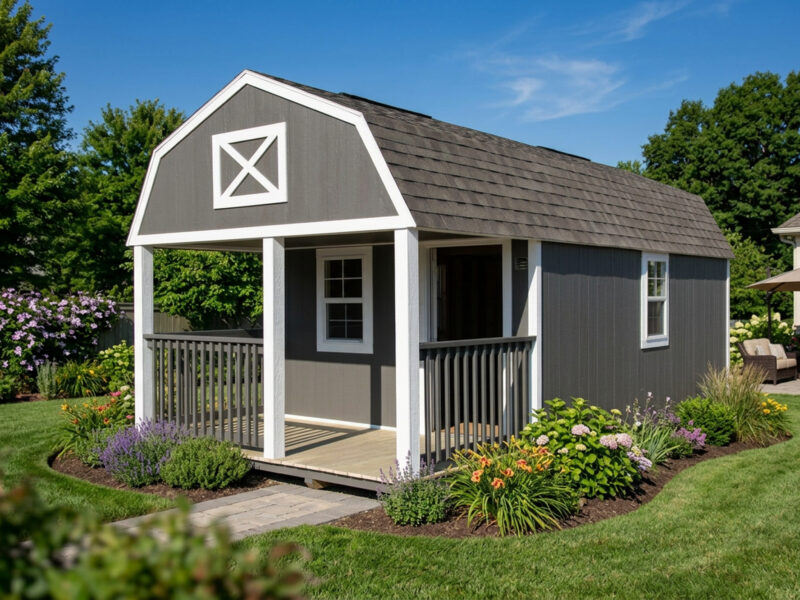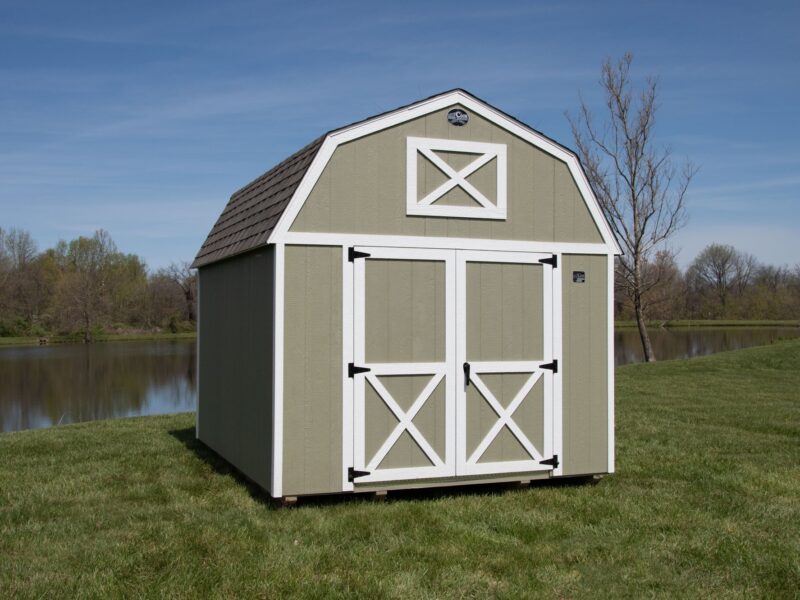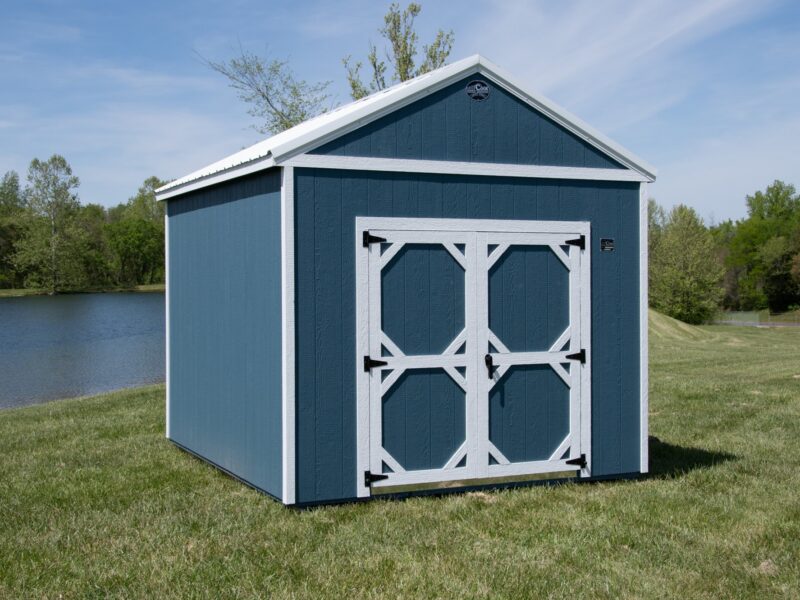
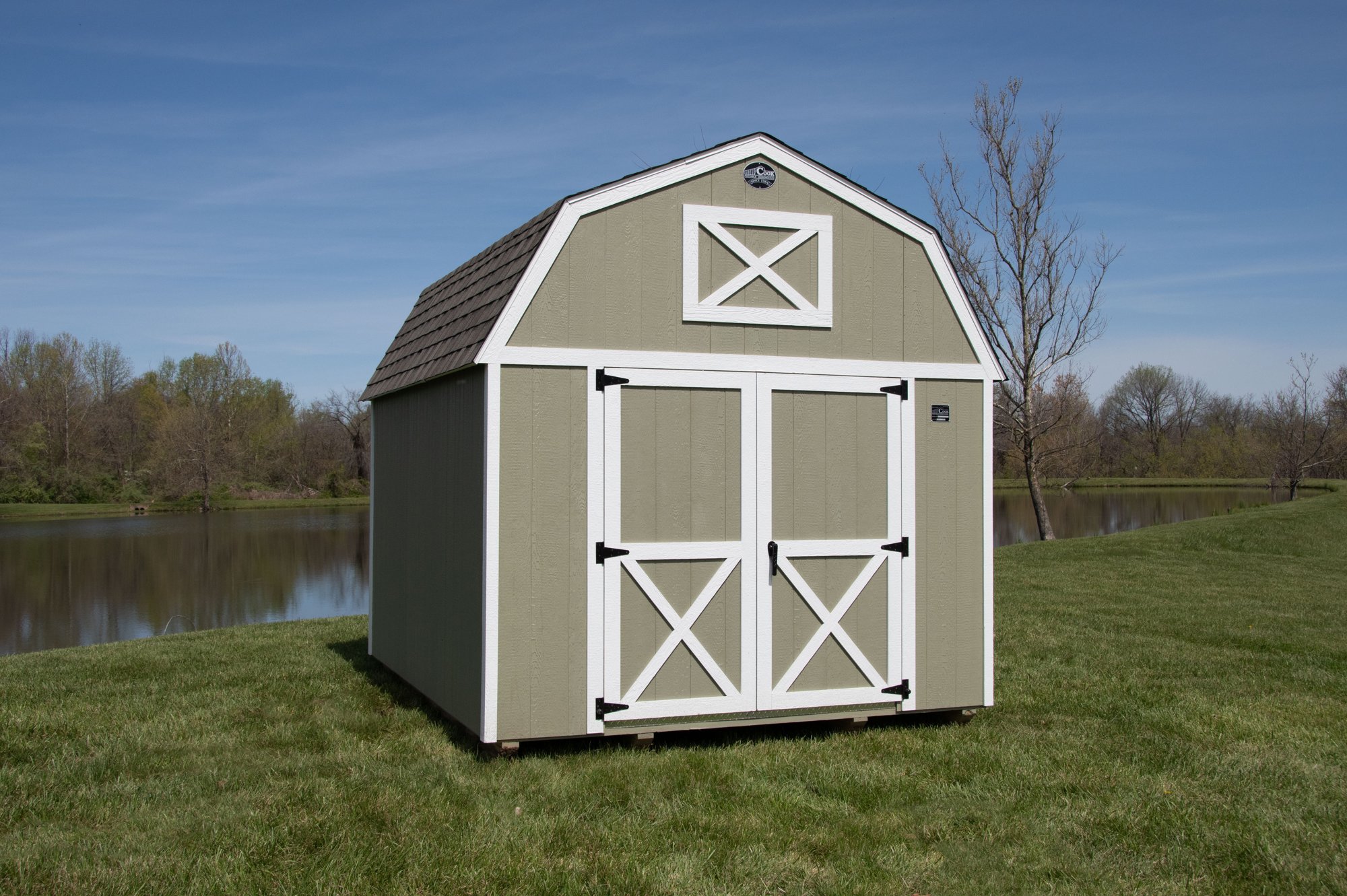
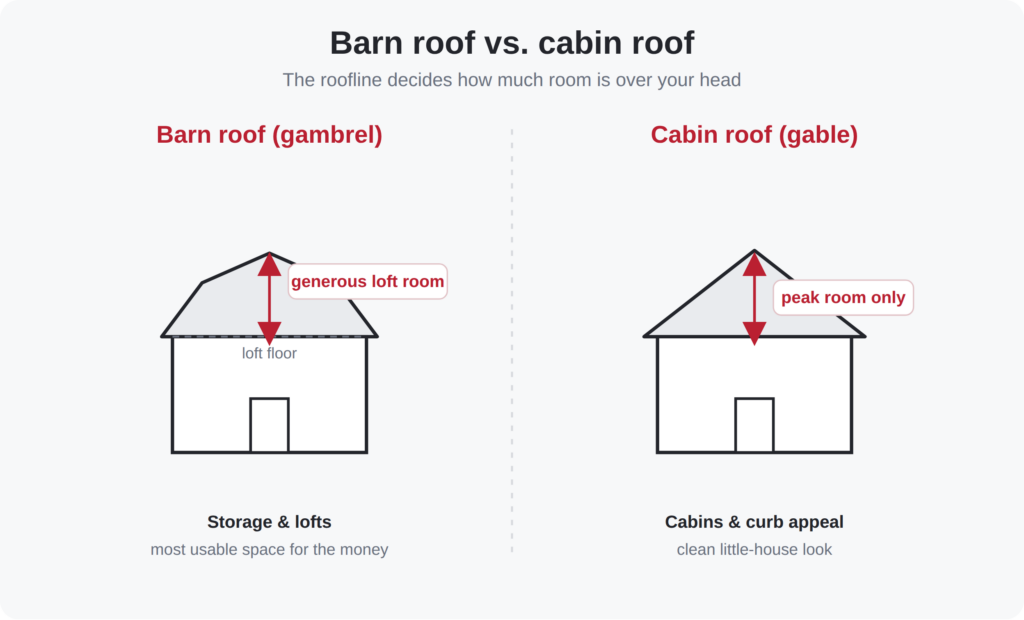
A barn roof is a gambrel — two slopes on each side — that lifts the center of the building into a tall, usable loft. A cabin roof is a single-pitch A-frame that gives a lower, cleaner “little house” profile. Choose the barn roof when you want maximum overhead storage; choose the cabin roof when the look and a simpler interior matter more.
The roofline is a shape decision, not a spec you order by the inch. It sets how much room lives above your head, how the building reads from the street, and which Cook wood building styles you’re choosing between.
The two rooflines, side by side
| Style | Roofline | Loft | Sidewall | Cash from |
|---|---|---|---|---|
| Lofted Barn | Barn (gambrel) | Standard | 6’3″ | $4,045 |
| Utility | A-frame | Optional add-on | 7’8″ | $3,599 |
| Lofted Cabin | Cabin (A-frame) | Standard | 6’3″ | $9,699 |
| Utility Cabin | Cabin (A-frame) | Not offered | 7’8″ | $11,245 |
Cash prices shown are starting points. Rent-to-Own — Ask Your Dealer.
The barn roof: overhead room is the point
The gambrel shape breaks each roof plane into a steep lower slope and a shallow upper slope. That keeps the walls of the loft closer to vertical, so the space above the loft floor stays wide instead of pinching to a narrow peak. On the Lofted Barn, that keeps the standard loft tall enough to hold boxes, seasonal gear, and long items overhead rather than leaving you a crawl space you avoid.
The Lofted Barn starts at $4,045 cash with the loft included, and among Cook’s core styles the gambrel is unique to it — most of the rest, including the Utility line, use the simpler A-frame roof covered next.
The A-frame roof: open utility or finished cabin
An A-frame roof runs a single pitch on each side to a center ridge — the classic gable you picture on a small house. Cook uses it two ways. In its plainest form it tops the Utility (cash from $3,599), which pairs the A-frame with taller 7’8″ sidewalls and a loft only as an optional add-on — handy when you’re rolling tall equipment onto an open floor and want loft space just where you need it. Dressed up, the same roofline gives the cabin styles their finished “little house” look — popular as she-sheds, home offices, hobby rooms, and backyard retreats where curb appeal counts as much as square footage. The Utility line is special-order, so plan a little extra lead time.
The Lofted Cabin pairs that A-frame profile with a standard loft and 6’3″ sidewalls, starting at $9,699 cash. The Utility Cabin carries the same cabin look with taller 7’8″ sidewalls and no loft — an open, high-walled interior built around how you want to use the floor. Like the rest of the Utility line, the Utility Cabin is special-order.
Which roof fits which job
Pick the barn roof if…
Storage volume is your priority. You’re stacking totes, stowing holiday decorations, or keeping long items overhead and out of the way. The gambrel’s taller center and standard loft (on the Lofted Barn) turn the top half of the building into real capacity, and the Lofted Barn is the lowest entry point of these four at $4,045 cash.
Pick the cabin roof if…
The building will be seen — from the house, the street, or by guests — and you want it to look like a small home rather than a shed. The A-frame profile suits finished-out uses, and the taller-walled Utility Cabin gives you an open interior when a loft would just be in the way.
A quick reminder on Cook’s lineup: the Lofted styles are the standard catalog and come lofted by default, while the Utility line (Utility and Utility Cabin) is special-order. Both rooflines are wood buildings meant for storage, workspace, and equipment — not cars or trucks.