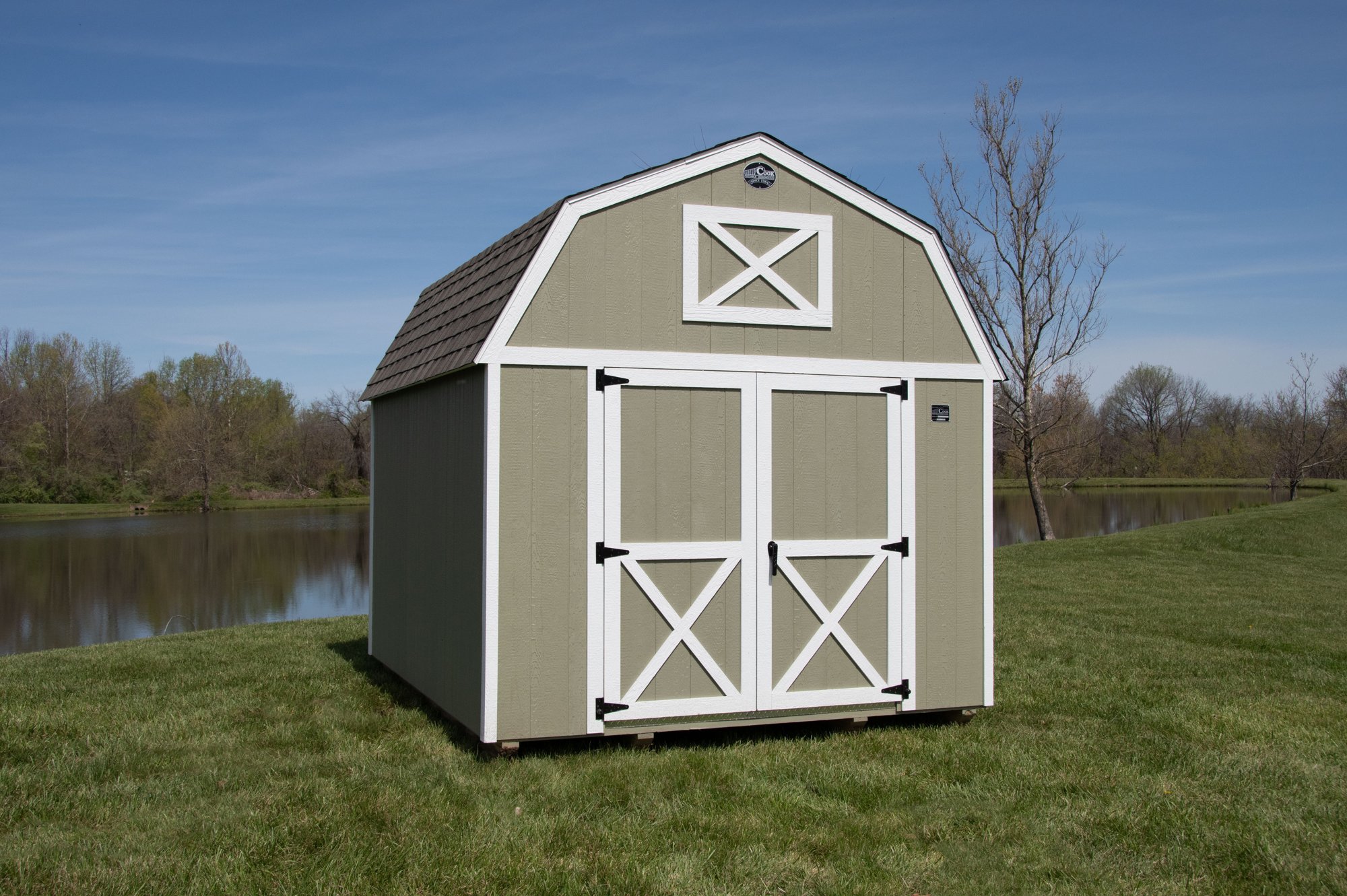
Most Cook Portable Warehouses buildings come lofted as standard. The loft is overhead storage built into the roofline above the walls, so it holds seasonal bins and long items without taking a single square foot off your floor. You only need the non-lofted Utility line, which is special-order, when you want a fully open floor-to-ceiling interior for tall equipment.
What the loft actually adds
On a lofted building, the sidewalls stand 6’3″ and the roof pitches up above them. That triangle of space above your head becomes a shelf that runs the length of the building. You get a place for holiday totes, camping gear, extra lumber, and anything you reach for a few times a year, while the floor below stays clear for the mower, the workbench, or the shelving you use every week.
Because the loft lives in space you were never going to walk through anyway, adding it costs you nothing on the floor. That’s why Cook builds the loft in by default across its most popular styles rather than treating it as an upgrade.
When lofted is the right call (and it usually is)
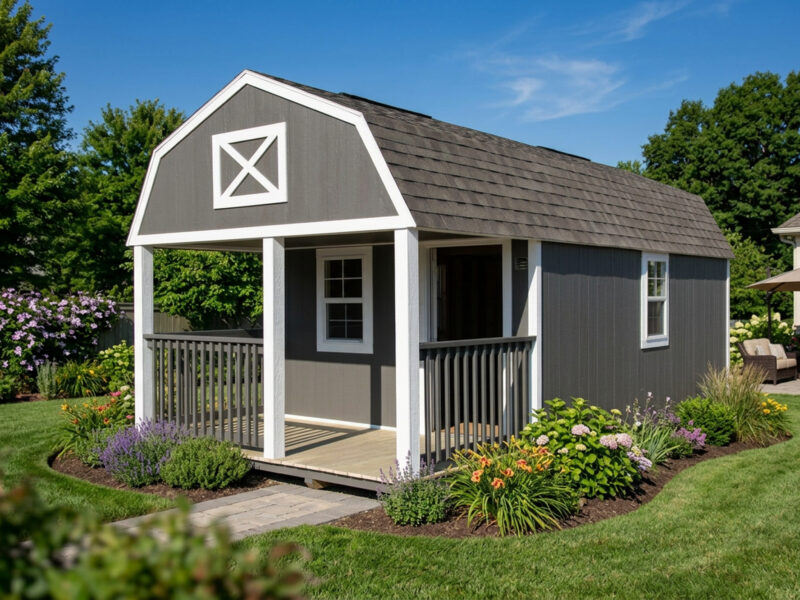
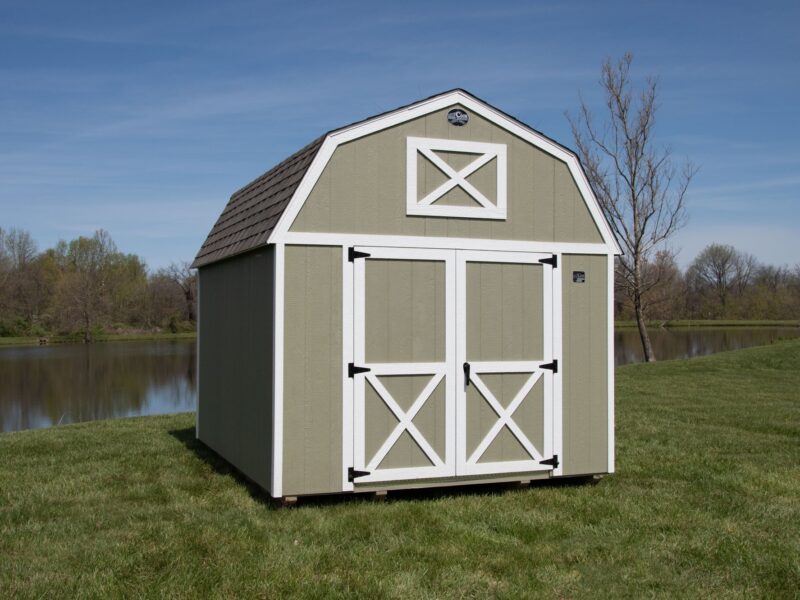
If you’re storing a normal mix of household and yard items, a lofted building is the straightforward answer. The Lofted Barn is the entry point at $4,045 cash, with the standard loft and a tall barn-style roofline that opens up the space overhead. Step up and the loft comes standard the whole way: the Lofted Cabin ($9,699 cash) gives you a finished-looking retreat or home office with storage tucked overhead, and the Lofted Garage ($10,145 cash) pairs a wide door for equipment and small vehicles with that same loft above.
The Handyman pairs a Lofted Barn end with a Lofted Utility end, so it comes with the loft standard over the barn end. For most buyers, the question isn’t whether to get a loft — it’s which lofted style fits the job.
When the Utility line makes sense
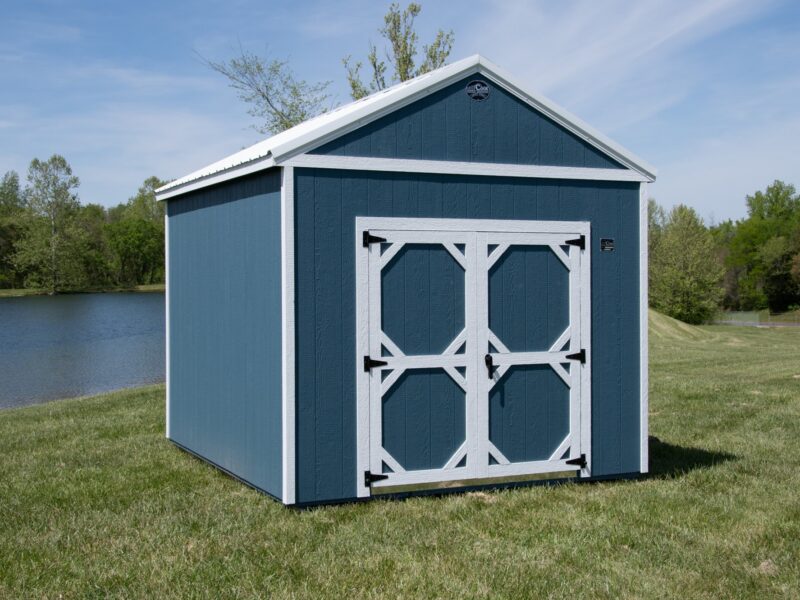
The Utility line is the exception. It’s special-order rather than shelf-standard, and its draw is a taller 7’8″ sidewall — nearly a foot and a half more open wall height than the 6’3″ on the lofted styles. That extra vertical clearance matters when you’re rolling in a tall tractor, a lift, ladders on end, or shelving you want to run all the way up the wall without a loft in the way.
The base Utility starts at $3,599 cash, actually below the Lofted Barn, and a loft is available as an optional add-on if you decide you want one after all. The Utility Garage ($9,015 cash) brings the same open bay and optional-loft flexibility to a garage layout for equipment and small vehicles. The Utility Cabin ($11,245 cash) is the fully open version — its ceiling stays clear top to bottom, with no loft offered, for buyers who specifically want that openness.
Two things worth knowing: Cook’s wood garages are sized for equipment and small vehicles, not full-size cars or trucks, and none of these buildings are metal. Choose the Utility line for openness, not to save money — the savings only show at the base Utility, and you’re trading standard availability for a special order.
Lofted vs. Utility at a glance
| Style | Loft | Best for | Cash from |
|---|---|---|---|
| Lofted Barn | Standard | Everyday storage with overhead room for seasonal items | $4,045 |
| Lofted Cabin | Standard | Finished retreat or office with a storage loft above | $9,699 |
| Lofted Garage | Standard | Equipment and small vehicles plus overhead storage | $10,145 |
| Utility | Optional add-on | Open 7’8″ walls for tall gear; loft only if you add it | $3,599 |
| Utility Garage | Optional add-on | Open garage bay for tall equipment and small vehicles | $9,015 |
| Utility Cabin | Not offered | A fully open, loft-free cabin ceiling | $11,245 |
Cash prices shown are starting points; Rent-to-Own is available — Ask Your Dealer. A dealer can walk you through sidewall heights, door placement, and whether a Utility special order is worth it for what you’re storing.