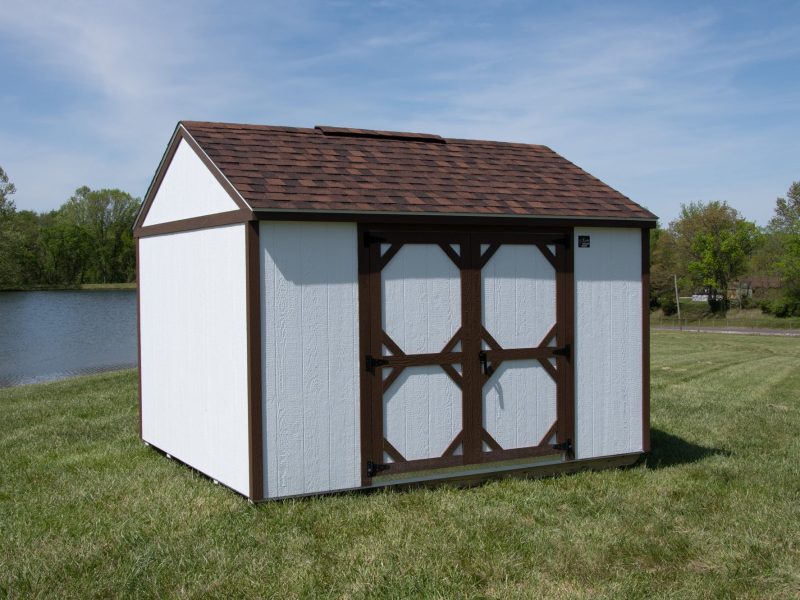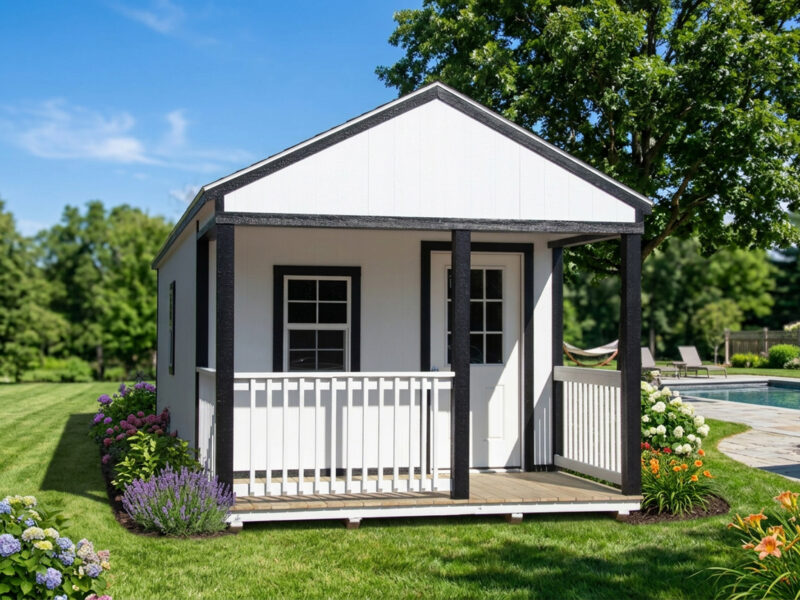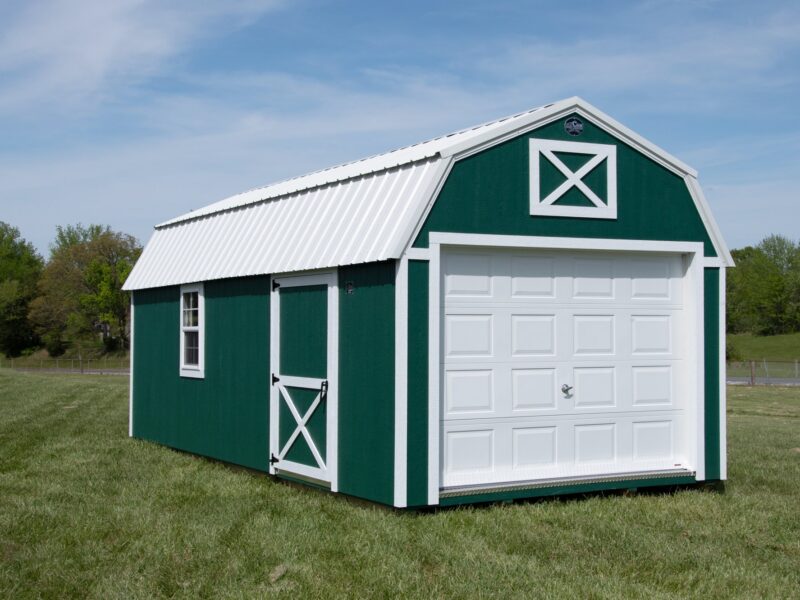
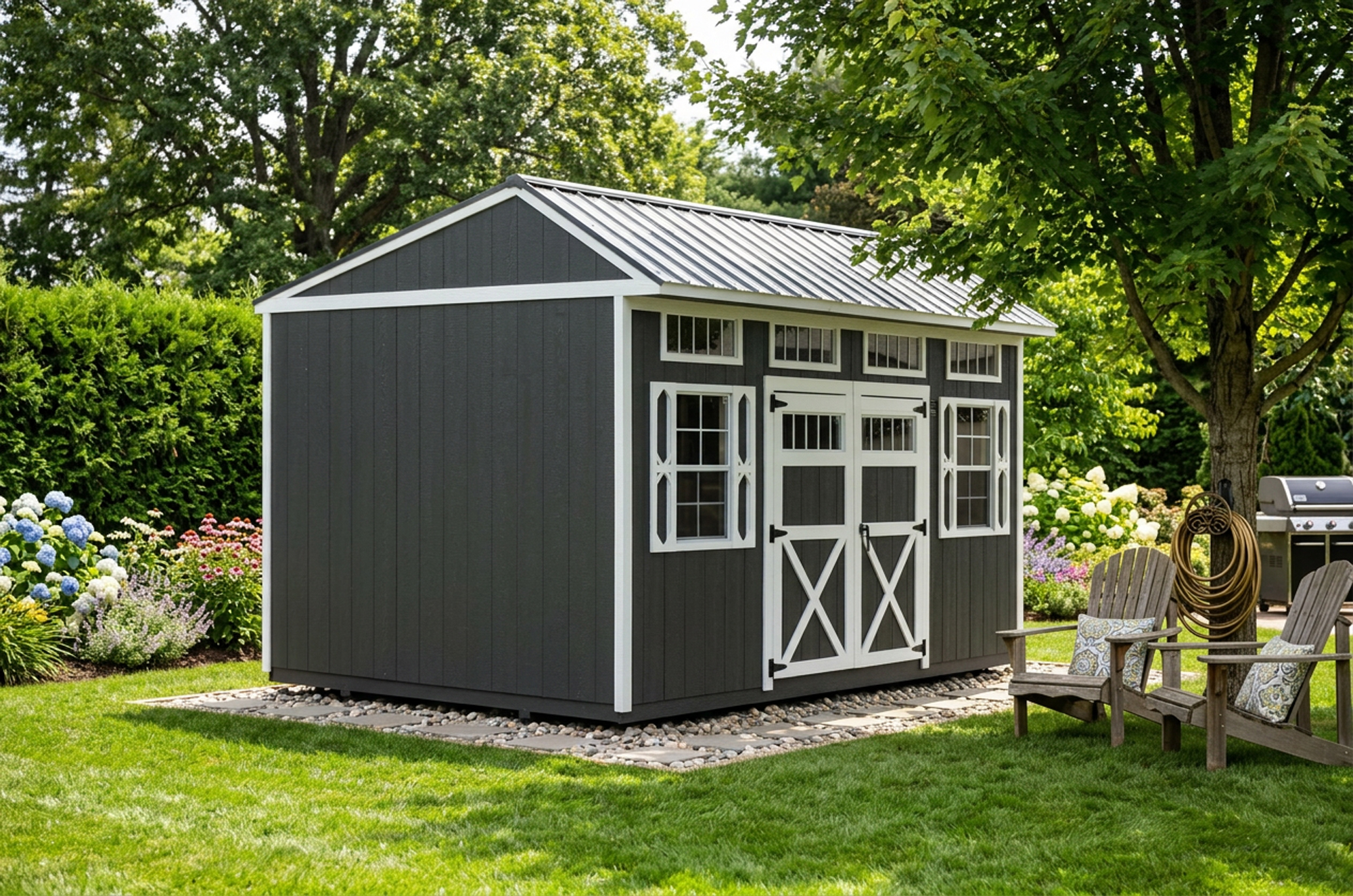
A wood portable building needs a light seasonal check to stay weather-tight: inspect the shingles and roofline, touch up paint and caulk on trim, oil the door hardware, clear the gutters and gravel base, confirm the vents flow, and look for pest entry points. Do a full pass each spring and fall, plus a quick look after any major storm.
None of it takes long. A wood building that gets twenty minutes twice a year holds up for decades; one that gets ignored is where small problems — a lifted shingle, a hairline crack in the caulk, leaves packed against the trim — quietly turn into rot. Here is exactly what to check and when.
Spring maintenance checklist
Spring is your recovery pass. Winter moisture, freeze-thaw cycles, and wind are hardest on wood, so you are looking for what the cold season loosened.
- Walk the roof line. From the ground (or a stable ladder), scan for lifted, cracked, or missing shingles and any dark streaking. Winter wind lifts shingle tabs; catch them before spring storms drive rain underneath.
- Check trim, corners, and the door frame for open caulk. Run a finger along seams where two boards meet. Any gap or cracked bead of caulk is a water path into the end grain — reseal it with a paintable exterior caulk.
- Touch up paint and bare spots. Wood left exposed drinks water. Spot-prime and paint any chip, scuff, or worn edge, paying attention to the bottom trim and door edges that take the most abuse.
- Clear gutters and check drainage. If your building has gutters, flush leaves and grit so meltwater runs off instead of backing up under the drip edge. Then look at where the water lands — it should flow away from the base, never pool against it.
- Clear the base. Rake back leaves, mulch, grass clippings, and soil that piled against the skids over winter. Anything holding moisture against the wood is the number-one cause of bottom-board rot.
- Open it up and check for winter pests. Look for mouse droppings, nests, wasp starts in the eaves, and chewed corners. Spring is when critters that wintered inside get active.
- Oil the door hardware. Hit hinges, the latch, and any lock or barrel bolt with a light lubricant, and confirm doors swing and latch cleanly. Wood swells and settles seasonally, so a door that dragged in winter may need the hinges snugged.
Fall maintenance checklist
Fall is your prep pass — you are sealing the building up for the wet, cold months ahead.
- Re-inspect shingles before winter. A shingle that is fine in July can lift in a fall storm. Fix anything questionable now, because roof work in freezing weather is miserable and the sealant strips won’t bond in the cold.
- Final caulk and paint check. Reseal any seam that opened over the summer’s heat. This is the last easy window before the wood is cold and damp.
- Deep-clean the gutters. Do this after most leaves have dropped so they don’t clog and freeze mid-winter, which forces water back under the eave.
- Confirm ventilation is clear. Gable vents, soffit vents, and any windows or ridge venting need to breathe. Blocked airflow traps humidity inside, and trapped moisture is what warps shelving and grows mildew on stored items. Clear any nests or cobwebs choking the vents.
- Clear and grade the base again. Pull fallen leaves and debris away from the skids so nothing sits wet against the wood all winter.
- Seal pest entry points. As it cools, rodents look for a way in. Check corners, the door sweep, and any gap around the base, and close what you can before they move in for winter.
- Lubricate hardware and test the door seal. A door that shuts tight keeps blowing snow and driving rain out.
Wood-specific care that protects your building
A few points on a wood portable building matter more than the rest. These are worth a little extra attention.
Paint and caulk are the whole ballgame
Paint isn’t cosmetic on a wood building — it’s the waterproofing. As long as the paint film and the caulk seams are intact, water rolls off. The moment either fails, wood wicks moisture and starts to break down from the inside. Touching up a chip the size of a coin every spring is a five-minute job; letting it go until the board is soft is a repair. Keep a small can of matching exterior paint and a tube of paintable caulk on hand and treat spot fixes as routine.
Keep the base clear and dry
Cook buildings arrive fully built and set on a level, non-permanent base — typically a gravel pad, not a poured foundation. That base does its job only if it stays clear. A proper gravel pad runs about 12 inches larger than the building footprint on each side, which gives water room to drain away instead of splashing back onto the trim. Keep grass, mulch, and soil raked off the pad, keep the gravel where it belongs, and make sure the ground still slopes water away from the building — settling over a few seasons can change that. A dry base is the single biggest factor in how long the floor and bottom boards last.
Let it breathe
Ventilation keeps the inside dry. A sealed-tight wood building with no airflow sweats — humidity condenses on the underside of the roof and on whatever you’ve stored. Keep gable and soffit vents unobstructed year-round. If your building has windows, cracking them on dry days moves a surprising amount of moisture out. This matters most for enclosed styles used as workshops or hobby space, like the Studio or a Garden Shed with lots of glass, where you’re inside and generating humidity yourself.
Roof and shingles
The roof takes the most weather and shows problems first. Two ground-level scans a year plus a check after any big storm is enough. Catch a lifted or missing shingle early and it’s a one-shingle fix; miss it and water tracks into the decking and shows up later as a stain on the ceiling. Never let debris — branches, leaves, a dropped limb — sit on the roof holding moisture against the shingles.
Doors, hardware, and heavier styles
Doors are the moving part that gets used and abused. Wood swells in humidity and shrinks in dry cold, so a door that latched perfectly in summer may bind in a wet spring — a light oiling of the hinges and an occasional adjustment keeps it true. This is especially worth staying on top of on styles with big or double doors, like a Utility building or a Lofted Garage you’re driving a mower or equipment through. (Cook wood garages are sized for equipment and small vehicles, not cars or trucks — keep the load matched to the building.) A well-loved workshop like the Lofted Barn earns its keep for decades on this routine.
After a major storm
You don’t need the full checklist after every rain, but a quick look after high wind, hail, or a heavy snow load pays off:
- Scan the roof for lifted, cracked, or missing shingles and any impact marks from hail.
- Pull any branches or debris off the roof and away from the base.
- Check that drainage still carries water away and nothing is pooling against the building.
- Look inside for any new water stains on the ceiling or walls — the earliest sign of a compromised roof.
When to bring in your dealer
Most of this is a homeowner job. But if you find soft or spongy wood, a persistent leak you can’t source, the building sitting out of level, or damage from a storm, that’s a call to your local Cook dealer. A free on-site check is available through your dealer — they can assess the base, the roof, and anything structural, and confirm what a fix takes before a small issue becomes a big one.
The same dealer handles delivery and setup if you ever add a second building or need one re-leveled.