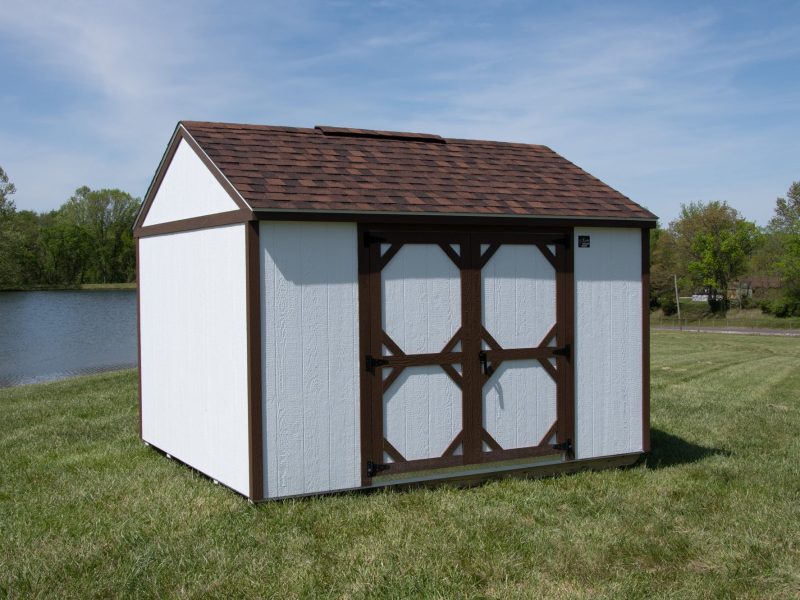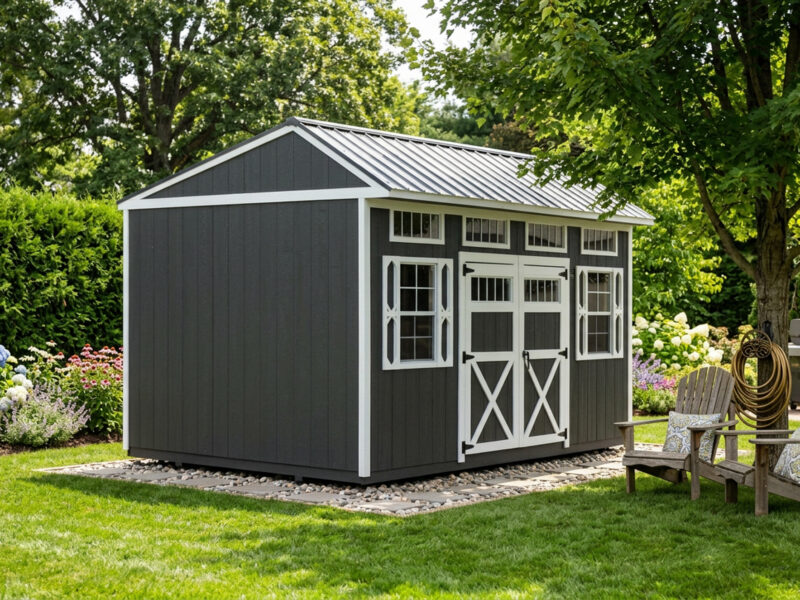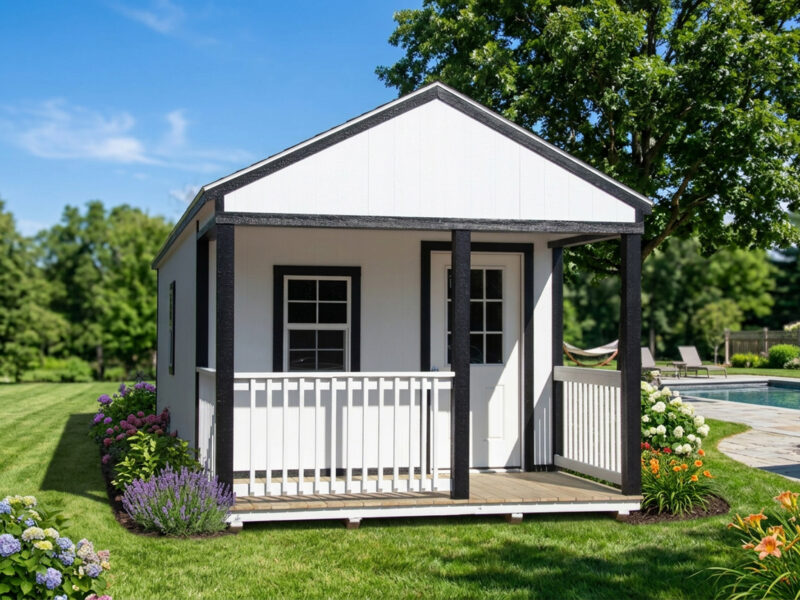
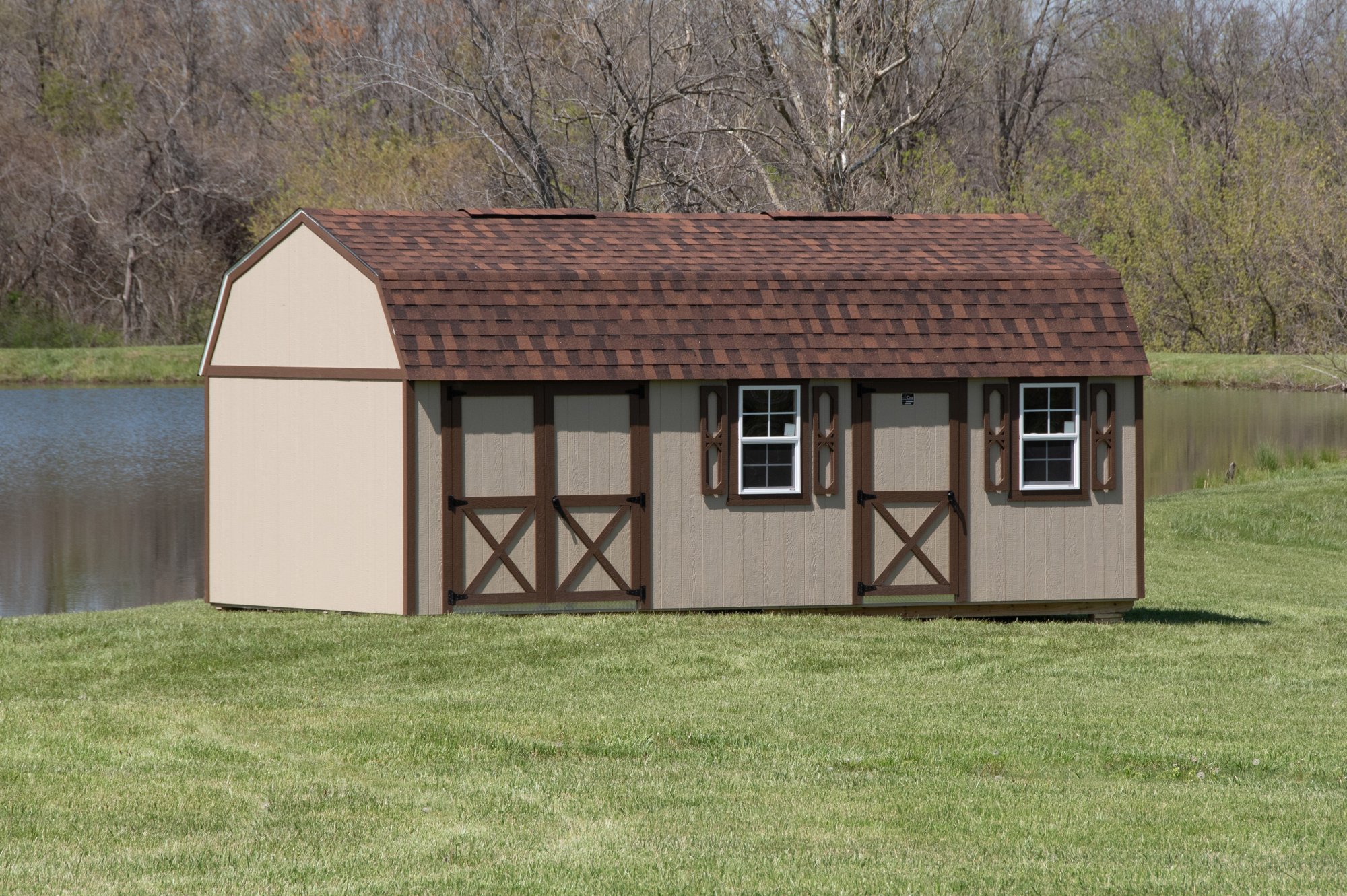
On delivery day, Cook delivers your wood building fully assembled on a truck and mule, sets it exactly where you want it, and levels it in place on your gravel pad — no construction on site. Once the driver has clear access to the spot and your path and pad are ready, setting and leveling usually takes well under an hour.
Before delivery day: the free dealer site-check
The one thing that makes delivery go smoothly is a walk of your property before the truck shows up. Your local Cook dealer offers a free on-site check: they look at where you want the building, confirm the truck and mule can reach it, and flag anything that has to change — a gate that’s too narrow, a soft spot in the yard, a low branch. Since your building arrives fully built, access is the whole job. A ten-minute site check now beats a truck that can’t reach the spot on delivery day.
This is also when you settle the pad. Cook sets buildings on a level, non-permanent base — typically a gravel pad — not a poured, permanent foundation by default. Your dealer tells you exactly how big to build it and where to put it.
What the truck and mule need to reach your spot
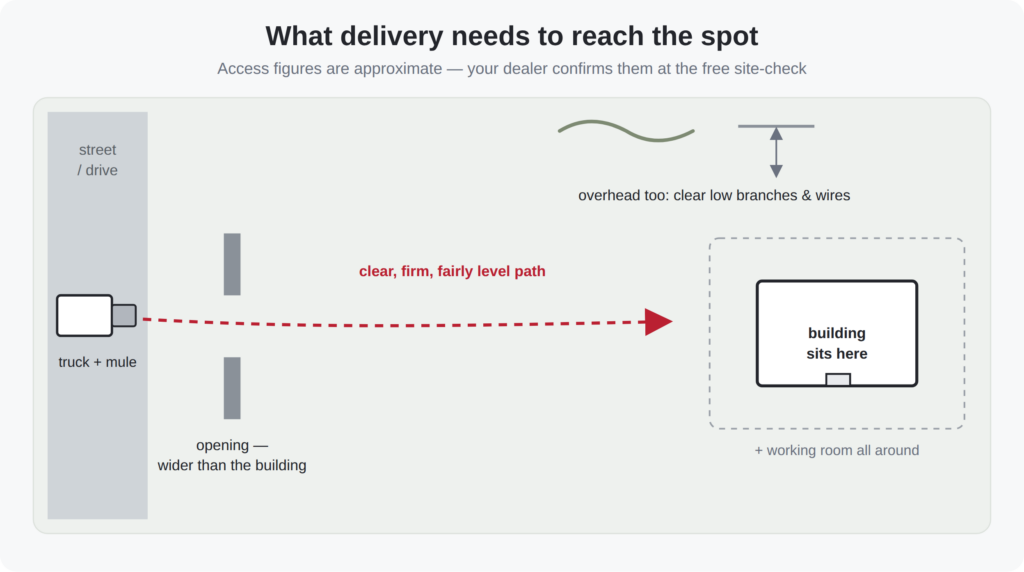
Cook uses a delivery truck and a “mule” — a compact drive unit that maneuvers the building into tight spots. Both need room. The figures below are approximate; every lot is different, and your dealer confirms the exact access your property needs during the site-check:
- Overhead clearance: roughly 14 ft of clear height for the truck and mule — watch for tree limbs, power and utility lines, eaves, and gate arches.
- Side clearance: about 2 ft of open space on each side of the building as it travels and gets positioned.
- Straight approach: about 40 ft of straight, drivable approach to line the building up with the pad.
Wider or longer styles need more room, so plan around your actual building. A compact Garden Shed or Studio footprint tucks into a tighter yard than a full Lofted Barn or Lofted Garage. If you’re still choosing, your dealer can point you to a size that fits both your storage needs and your access.
How Cook sets and levels your building in place
Once the mule has the building over the pad, the crew positions it in the exact spot and orientation you want — doors facing the direction you asked for — then levels it. Leveling uses treated blocks under the skids, so the building sits flat and true even if your ground has a slight slope. A level set is what keeps doors swinging square and the floor solid for years. There’s no on-site assembly and no permanent footing poured into your yard: the building is set, leveled, and ready to load the same day.
Because the base is non-permanent, a Cook building can be re-leveled or relocated later — handy if you move, re-landscape, or add a second building. Keep in mind these are wood buildings, and any garage-style unit is sized for equipment and small vehicles, not full-size cars or trucks.
Prepping the path and the pad
A little prep on your end removes almost every delivery-day surprise. Use this as your checklist:
- Build the gravel pad first. Make it roughly 12 in larger than the building footprint on each side, and get it level. Your dealer confirms the exact pad size for your model during the site-check.
- Clear the approach. Move vehicles, trailers, trash cans, and toys off the drive path and out of the roughly 40 ft straight run to the pad.
- Check overhead. Trim branches and note any wires below about 14 ft along the whole route, not just over the pad.
- Widen the pinch points. Open gates and measure any spot the building has to squeeze through — you want about 2 ft of clearance on each side.
- Mark the spot. Flag or stake exactly where you want it and which way the doors face, so the crew sets it right the first time.
- Confirm access to the ground. Soft, muddy, or steep yards can stop a loaded mule — tell your dealer up front so they can plan.
Payment, permits, and paperwork
Delivery is handled through your dealer, and that’s where financing questions go too: Rent-to-Own — Ask Your Dealer. If you’re not sure whether your county or HOA wants a permit for a portable building, check our shed permit guides before delivery day. Sorting permits early keeps your set-in-place date on schedule.
Whether you’re adding a Utility workspace, a Lofted Cabin for extra storage, or another lofted style, the delivery process is the same: built at the Cook facility, delivered whole, set and leveled on your pad, done.